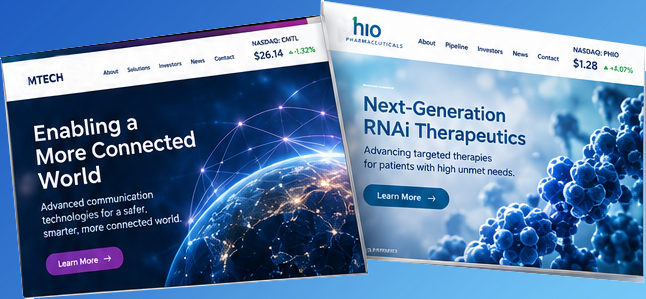
How AI search, digital storytelling, and flexible technology are reshaping the modern investor relations website.
An investor relations website is no longer simply a place to publish earnings releases, SEC filings, and stock information. In 2026, it is becoming a central part of how public companies communicate their investment story, establish credibility, and help investors understand their business.
As investor behavior evolves and artificial intelligence changes how financial information is discovered, companies must rethink what their IR websites should accomplish. Strong design remains essential, but it must work alongside accessible content, reliable financial data, intuitive navigation, and technology that can adapt to changing business needs.
For public companies listed on the NYSE and Nasdaq, the opportunity is clear: transform the IR website from a basic information repository into a strategic investor communications platform.
Here are seven trends shaping the future of investor relations website design.
1. AI Search Is Changing How Investors Discover Companies
One of the most significant developments in digital investor relations is the growing use of AI-powered tools to research companies, summarize earnings results, and compare financial performance.
Investors and analysts can increasingly ask tools such as ChatGPT, Gemini, and Perplexity questions about a company instead of relying exclusively on traditional search engines or navigating multiple website pages.
This creates a new consideration for IR website design: Can AI systems find, interpret, and accurately understand the information your company publishes?
Answer Engine Optimization (AEO) is emerging alongside traditional search engine optimization. For IR websites, this means presenting corporate information in a clear, organized, and machine-readable format.
Companies should consider:
- Using descriptive headings and logical page structures.
- Publishing clear explanations of the business model, strategy, and investment thesis.
- Making financial results, earnings materials, and corporate disclosures easy to locate.
- Providing accessible HTML content rather than relying exclusively on downloadable PDFs.
- Maintaining consistent terminology and current information across the website.
AI optimization does not guarantee that a company will appear in AI-generated answers. However, clear, structured, authoritative content gives search systems a better foundation for understanding the company.
The design implication is important: visual presentation and information architecture must work together.
2. Investor Relations Websites Are Becoming Brand Experiences
For years, many corporate IR websites followed similar templates. Financial data, stock charts, press releases, and SEC filings occupied predictable positions, while the company’s broader identity often received less attention.
That approach can satisfy basic information needs, but it may not communicate what differentiates one company from another.
Modern IR website design increasingly emphasizes the investment story itself. The website should help visitors understand not only what a company does, but also where it is going, how it competes, and what management believes will drive future growth.
Effective design can support that story through:
- A clear, compelling presentation of the company’s investment thesis.
- Strong visual hierarchy that emphasizes important messages.
- Custom graphics, charts, and infographics that simplify complex information.
- Thoughtful use of photography, video, and executive messaging.
- Consistent visual branding across the corporate website, annual report, ESG report, and investor presentations.
The goal is not to make an IR website look like a consumer marketing site. It is to create a distinctive corporate experience while preserving the clarity, credibility, and professionalism investors expect.
3. User Experience Matters More Than Ever
Investors visit IR websites with specific objectives. They may need the latest earnings release, historical financial results, an upcoming earnings call, governance information, or the company’s most recent annual report.
If that information is difficult to find, even an attractive website can create a poor impression.
A successful investor relations website prioritizes usability across desktop computers, tablets, and mobile devices. Navigation should be intuitive, critical information should be easy to access, and frequently used resources should not be buried beneath unnecessary layers of content.
Important design considerations include:
- Clear navigation organized around investor needs.
- Easy access to financial results, filings, events, and presentations.
- Responsive layouts that work across screen sizes.
- Readable typography, appropriate contrast, and accessible controls.
- Search functionality that helps visitors locate relevant information quickly.
Accessibility is also an important consideration. Companies should evaluate their websites against applicable accessibility requirements and recognized standards, including WCAG, as part of their digital planning.
A well-designed IR website reduces friction and makes it easier for investors, analysts, and other stakeholders to engage with company information.
4. Flexibility Is Becoming a Key Technology Decision
Another important industry trend is the growing interest in flexibility and control over the technology behind investor relations websites.
Some companies operate within proprietary platforms that offer convenient access to financial data and publishing tools but may limit design flexibility, integration options, or the ability to change providers.
As digital communications needs evolve, companies should evaluate more than the initial cost of an IR website. They should also understand how easily the site can be updated, redesigned, integrated with other corporate systems, and maintained over time.
Before selecting or renewing an IR website platform, companies should ask:
- How much freedom do we have to customize the design?
- Can our IR and communications teams update content efficiently?
- How does the platform integrate financial data, stock information, and investor communications?
- What happens to our website and content if we change providers?
- Are there limitations on functionality, portability, or future development?
The right solution depends on the company’s requirements. For some organizations, a fully integrated proprietary platform may be appropriate. Others may benefit from a more flexible approach that combines specialized IR technology with custom website design.
The important point is to choose technology that supports the company’s communications strategy rather than allowing technology limitations to dictate the experience.
5. Financial Data and Corporate Storytelling Must Work Together
Investors need accurate financial information, but numbers alone do not always explain a company’s performance or long-term direction.
A strong IR website connects financial results with the broader business narrative. It helps visitors move from the numbers to the context behind them.
For example, an earnings section might provide access to the latest financial results alongside the earnings presentation, conference call information, and relevant commentary from management. A strategy section might connect business priorities with operating performance and long-term objectives.
Annual reports, sustainability reports, proxy statements, and investor presentations can reinforce the same narrative when they share consistent messaging and visual language.
This is where design and corporate communications expertise become particularly valuable.
The objective is to make complex information easier to understand without oversimplifying the underlying financial or business details. Every chart, graphic, and content element should help investors interpret information more effectively.
6. Consistent Design Across Investor Communications Builds Credibility
An investor may first encounter a company through its IR website, then review its annual report, earnings presentation, proxy statement, or sustainability report.
When these materials look and communicate as though they belong to different organizations, the company’s overall presentation can feel fragmented.
A coordinated investor communications strategy creates a more consistent experience across digital and print materials.
This includes aligning:
- Corporate and investor relations website design.
- Annual report design and financial storytelling.
- ESG and sustainability reporting.
- Proxy statements and governance communications.
- Investor presentations and earnings materials.
Consistency does not mean every document must look identical. Each format has a different purpose and audience. Instead, the objective is to maintain a recognizable visual identity, clear messaging, and a unified presentation of the company’s strategy.
For public companies, this creates an opportunity to treat investor communications as a connected program rather than a collection of unrelated projects.
7. The Best IR Websites Combine Design, Technology, and Strategy
The future of investor relations website design will not be determined by appearance alone.
A successful website needs a strong visual identity, reliable financial data, thoughtful information architecture, useful functionality, and content that supports the company’s investment narrative.
It must also be manageable for the teams responsible for keeping information current.
This requires collaboration between design professionals, investor relations teams, corporate communications specialists, and technology providers. When those disciplines work together, companies can build digital experiences that are both visually distinctive and operationally effective.
At IR Creative Partners, we believe public companies should not have to choose between exceptional design and dependable IR technology.
Our approach brings together investor relations website design, corporate communications expertise, and QuoteMedia IR technology to help public companies present their information in a professional, cohesive, and engaging way.
Whether a company is considering a new IR website, evaluating its existing platform, or looking to improve consistency across its investor communications, the starting point is the same: understand what investors need, define the story the company wants to communicate, and build the right digital experience around both.
Is Your Investor Relations Website Ready for What Comes Next?
The expectations surrounding investor relations websites are changing. AI-powered discovery, better digital experiences, flexible technology, and more effective corporate storytelling are becoming increasingly important considerations for public companies.
A website that simply meets yesterday’s requirements may not fully support tomorrow’s communications goals.
Now is a good time to evaluate whether your IR website reflects your brand, makes important information easy to find, supports emerging search behaviors, and gives your team the flexibility it needs.
IR Creative Partners helps public companies bring exceptional design, corporate communications, and IR technology together.
Visit IR Creative Partners to explore how a more strategic approach to investor relations website design can strengthen your company’s digital presence.